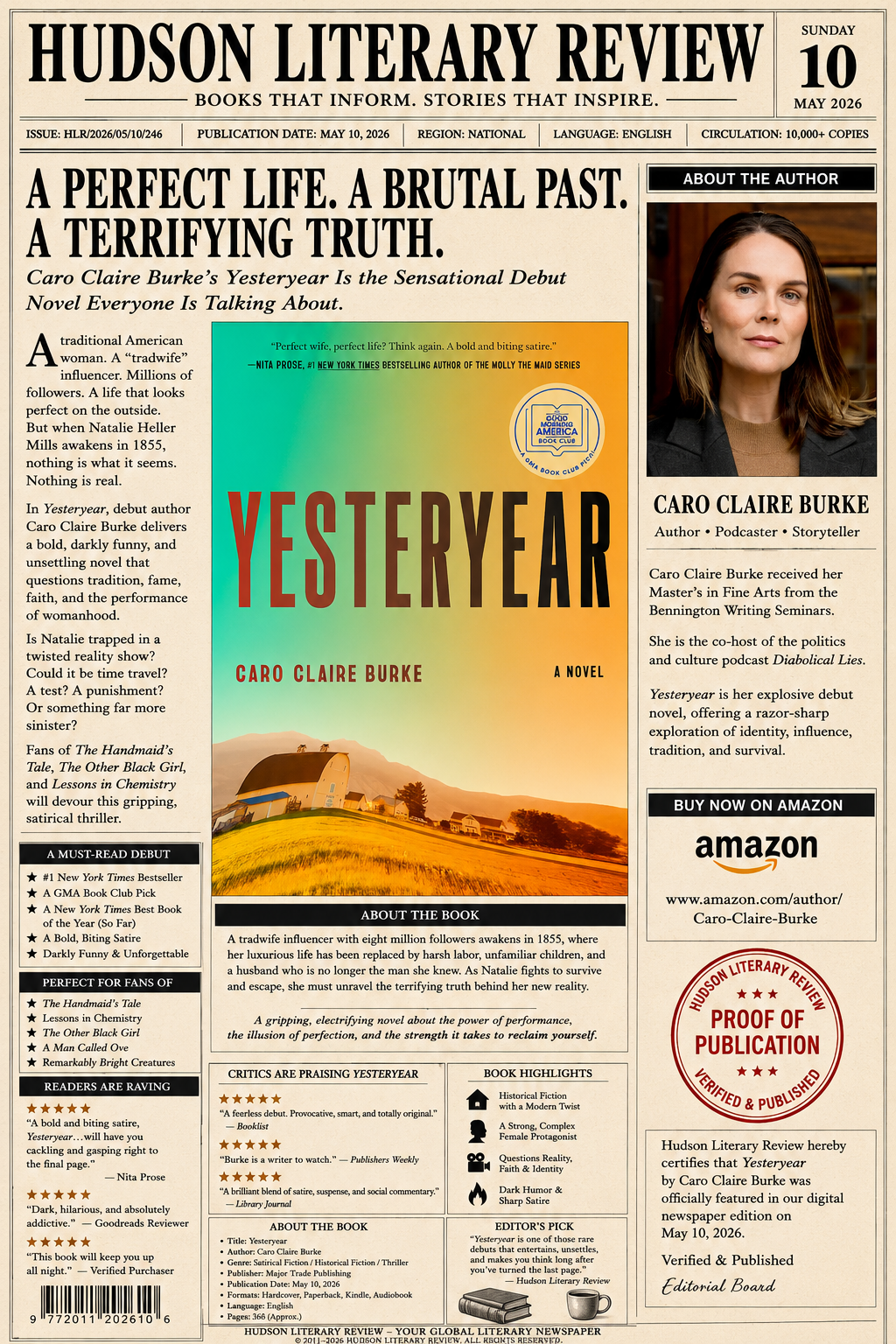
Caro Claire Burke has always written close to the bone, and A Perfect Life. A Brutal Past. A Terrifying Truth. sharpens that instinct into something approaching grace.
Caro Claire Burke's Yesteryear is the sensational debut everyone is talking about — a bold, darkly funny satirical thriller.
Plot, in the conventional sense, is almost beside the point. What propels the pages is closer to attention — the writer's, then ours — turning over the ordinary until it gives up its odd, persistent light.
A Question of Form
Character, here, is not announced; it accumulates. We learn who these people are the way we learn it of our neighbours: through small refusals, half-finished meals, the books left face-down on a kitchen chair.
“By the final pages, the reader has not so much finished the book as agreed to remember it.”
There are passages in this book that ask to be read twice, not because they are difficult, but because the first reading is too occupied with surprise to register the music underneath.
The dialogue is doing several jobs at once. It tells us where we are. It tells us who is listening. And, more rarely, it tells us what the silence between two people actually costs.
What the Book Knows
The dialogue is doing several jobs at once. It tells us where we are. It tells us who is listening. And, more rarely, it tells us what the silence between two people actually costs.
By the time the final chapter arrives, Caro Claire Burke has earned every quiet thing the book attempts. Few writers working today are doing so with this much patience, or this little vanity.