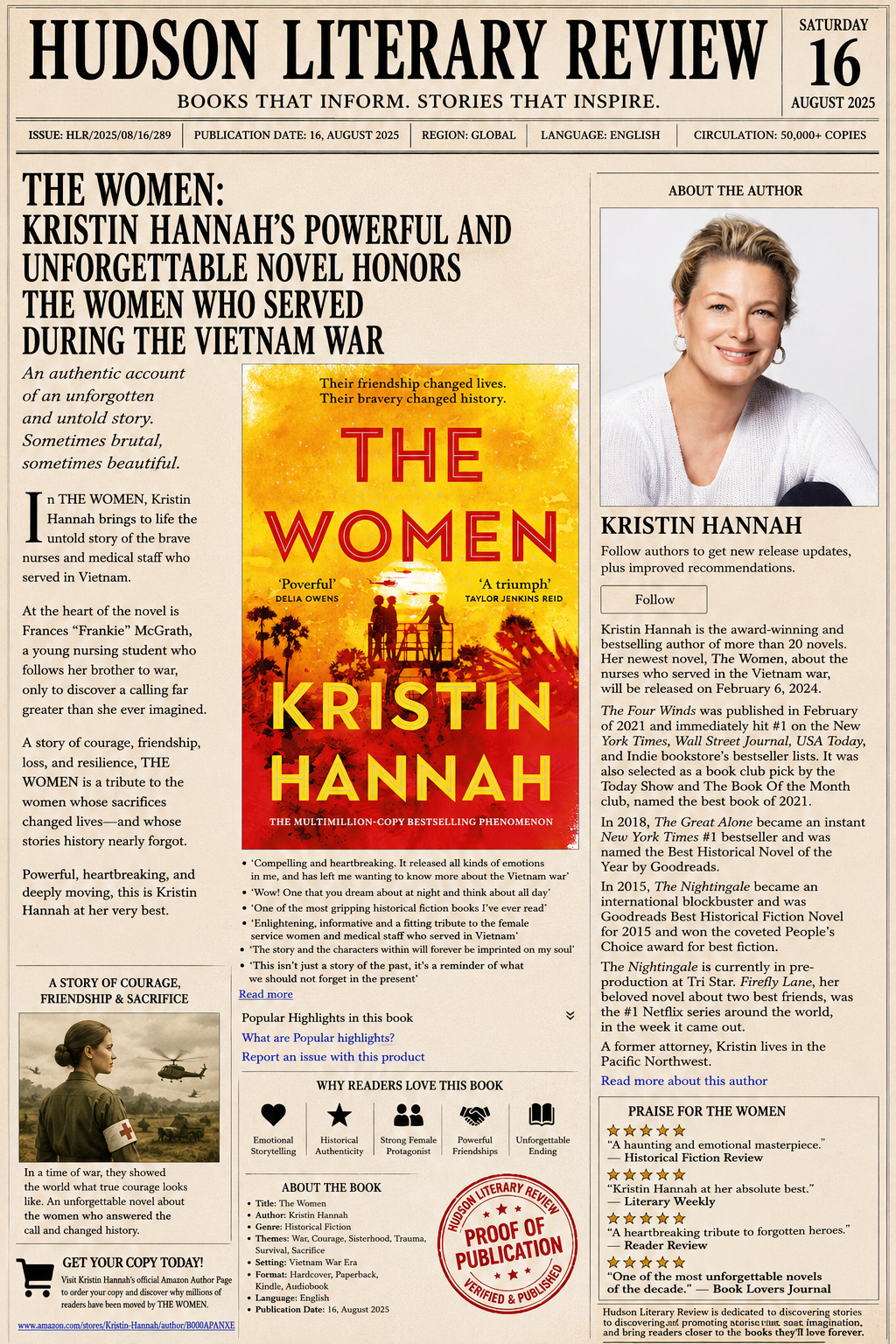
It would be easy to mistake The Women for a small book. It is not. It is a precise one.
A powerful tribute to courage, friendship, and sacrifice.
The prose moves like weather. Sentences gather, break, gather again. What looks at first like restraint is, on closer reading, a kind of generosity — the writer trusting the reader to feel the storm without being shown the lightning.
The Weight of the Quotidian
The prose moves like weather. Sentences gather, break, gather again. What looks at first like restraint is, on closer reading, a kind of generosity — the writer trusting the reader to feel the storm without being shown the lightning.
“It is the rare novel that grows larger as it grows quieter.”
The prose moves like weather. Sentences gather, break, gather again. What looks at first like restraint is, on closer reading, a kind of generosity — the writer trusting the reader to feel the storm without being shown the lightning.
Plot, in the conventional sense, is almost beside the point. What propels the pages is closer to attention — the writer's, then ours — turning over the ordinary until it gives up its odd, persistent light.
Listening to the Margins
There are passages in this book that ask to be read twice, not because they are difficult, but because the first reading is too occupied with surprise to register the music underneath.
By the time the final chapter arrives, Kristin Hannah has earned every quiet thing the book attempts. Few writers working today are doing so with this much patience, or this little vanity.